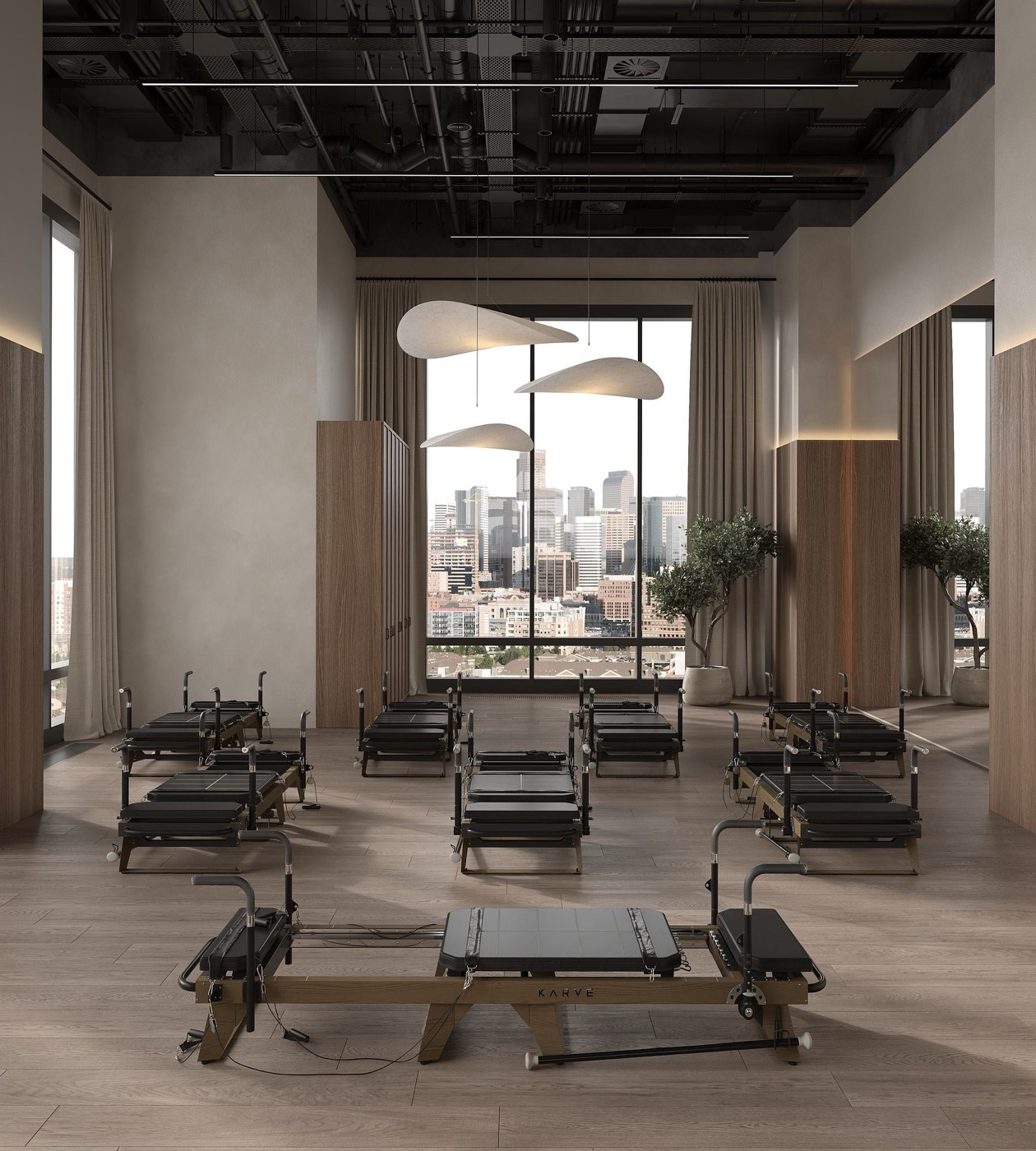
1. Validate the idea and the local market before committing capital
The most expensive mistake in opening a studio isn't a bad location or a badly calculated price — it's opening without having confirmed that enough people in that specific area want and can afford that discipline. Validating doesn't mean running a generic survey; it means securing real commitments before signing anything.
The most reliable way to validate is selling before you have the space: a founders'-package presale, pilot classes in an hourly-rented or borrowed space, or a waitlist with a refundable deposit. If 30 or 40 people are willing to pay upfront for something that doesn't physically exist yet, that's a far stronger demand signal than any opinion survey.
It's also worth mapping direct and indirect competition within a walkable or short-drive radius — not just other studios in your discipline, but traditional gyms and anything else competing for the same client time and budget. Understanding their prices, apparent occupancy, and what's missing from their offer gives you a real angle of differentiation, instead of copying a model that worked in a different city with a different demographic.
2. Basic financial plan: initial investment, break-even, and working capital
Initial investment for a wellness studio in Mexico varies enormously by city, space size, discipline, and whether the space needs a full remodel or arrives ready to go — quoting a single number would be misleading. What's constant is the structure of the spend: buildout, equipment, lease deposit and guarantee, licenses and permits, technology and software, and a working-capital cushion for the first months before client flow stabilizes.
Break-even is the number most founders either calculate wrong or don't calculate at all: how many classes or appointments you need to sell per month, at your average price, to cover rent, payroll, utilities, and other fixed costs. It's calculated by dividing your monthly fixed costs by your contribution margin per class or appointment (price minus the direct variable cost of that session). Without this number, it's impossible to know whether a "good" attendance month is actually profitable or just feels busy.
Working capital covers the period — almost always 3 to 6 months — where revenue still doesn't reach break-even while you build a client base. Underestimating this cushion is the most common reason a business with a good idea and good execution closes in its first year: not for lack of demand, but for running out of cash before demand matures.
3. Legal basics in Mexico: RFC, land use, and civil protection
Operating a business formally in Mexico generally requires registering it with the SAT (the tax authority) and obtaining an RFC — either as an individual with business activity or as a legal entity, depending on which structure fits your situation. This decision carries different tax and liability implications, so it's exactly the kind of call to make with your accountant, not by default.
Land use (uso de suelo) is the permit that most often catches first-time founders off guard: the municipal authorization confirming that a specific space can legally operate as the type of business you're planning (studio, gym, salon) under that borough or municipality's zoning. Verifying it before signing the lease, not after, avoids the scenario of investing in a remodel only to discover the space isn't authorized for your type of business.
Civil protection (protección civil) generally requires an internal program or assessment based on the space's size and expected capacity — marked emergency exits, current fire extinguishers, and in some cases staff training. Exact requirements vary by borough or municipality and by square footage, so check directly with local civil protection authorities or a specialized advisor before opening to the public.
- Registration with the SAT and RFC (individual or legal entity, depending on your case)
- Land use compatible with your business type, verified before signing the lease
- Civil protection program or assessment based on size and expected capacity
- Always consult your accountant and legal advisor for your specific situation
4. The space: location, square footage by discipline, and negotiating rent
Location matters more for a wellness business than for almost any other type of retail, because most of your clients come from a walkable or short-drive radius (5–15 minutes) from home or work. Before falling for a space, validate the real catchment radius: how many people with the right profile and purchasing power actually live or work within that distance.
Square footage needed varies a lot by discipline: a yoga or mat pilates studio needs less area per client than a reformer pilates studio with specialized equipment, a crossfit box with free-weight zones needs more open floor, and a salon needs to be configured by workstation rather than open area. As a general rule, calculate the target capacity of your largest class or service and work backward to the minimum square footage that supports that capacity with safe room to move — not the other way around.
When negotiating rent, the points with the most negotiating room tend to be: free months at the start for buildout (before full rent kicks in), the deposit amount, early-exit clauses, and who absorbs the cost of certain improvements to the space. A slightly pricier space with good free months can be cheaper in year one than a cheaper space with zero initial flexibility.
5. Insurance: why liability coverage isn't optional
A business where clients do physical activity, receive treatments, or use specialized equipment carries real exposure to injuries or accidents — and a signed waiver reduces legal risk but doesn't eliminate it. General liability insurance covers third-party claims for injuries or damages that occur within your operation, and it's the one policy most studios can least afford to skip.
Specialized providers exist for fitness and wellness insurance across LATAM that understand the specific risk of the activity (high-intensity group classes, equipment use, hands-on services) better than a generic business policy. It's worth getting quotes from at least two or three providers and comparing not just price but which specific scenarios each policy actually covers.
Beyond liability, depending on the size and type of business, it's worth evaluating contents insurance (equipment, furniture) and business interruption coverage. None of this replaces the advice of an insurance broker reviewing your specific case — this section is a map of what to ask, not a policy recommendation.
6. Equipment by vertical: what each type of business needs
Initial equipment is one of the most variable investment items across disciplines, and also one of the easiest to overbuy on launch. Mat yoga and pilates require the lowest investment (mats, props, bands); reformer pilates jumps significantly because of specialized equipment cost. Crossfit and functional training need fixed structure (racks, platforms) plus free-weight equipment. Indoor cycling concentrates almost all investment in the bikes themselves. Salons and spas invest more in workstations, furniture, and service-specific equipment (chairs, treatment tables, equipment).
A common practice among studios opening with limited capital is starting with the minimum viable equipment for the real capacity of the first few weeks — not the aspirational six-month capacity — and reinvesting in additional equipment as real demand justifies it. Buying for the space's maximum capacity from day one ties up capital that's usually better spent on launch marketing and an operating cushion.
7. Staff and coach payroll
The most common coach payment model at boutique studios combines a fixed per-class component with, in some cases, a bonus tied to attendance or retention — this aligns the coach's incentive with what the business actually needs, not just showing up. A pure fixed-salary model is simpler to administer but gives less direct incentive toward class quality or the word-of-mouth a well-liked coach generates.
Hiring coaches with verifiable certification in their discipline isn't just about class quality: in a potential liability claim, having certified staff with documented evidence of that certification is part of what an insurer and a legal advisor expect to see.
For operational payroll — calculating and paying what each coach is owed based on classes taught, attendance, or commission — management software that automates that calculation avoids the most common manual error in fast-growing studios: overpaying or underpaying because you lost track of how many classes a coach taught that month. This is distinct from formal tax payroll (fiscal invoicing), which remains your accountant's territory.
8. Pricing: what to charge before you open
Setting prices before you open, not after the first few weeks, avoids the most common problem for new studios: launching with a low price "to attract people" and then having to raise it, creating friction with the first clients who were drawn in precisely by that price. The fundamentals — cost per class-spot, target margin, and the single-class-versus-package-versus-unlimited model — are the same ones that apply to any studio already operating.
If you want to go deeper on the full pricing formula, reasonable margin by category, and pricing psychology for the LATAM market, we have a guide dedicated entirely to this: "How to price your classes," available in the resources hub.
9. Operations software: what you need from day one
Managing bookings, payments, memberships, and client communication through spreadsheets or WhatsApp groups works for the first few weeks and stops working exactly when the business starts growing — that's the moment most founders start losing bookings, miscollecting payments, or losing track of who's already paid for their package.
Ollynk covers this operation from day one: bookings with cancellation rules and waitlists, automatic billing for packages and memberships, a dedicated app so your clients can book and pay without calling you, and occupancy reports you'll later use for exactly the pricing and scheduling decisions covered in the previous section. For a studio that's opening, the advantage of starting with the right software from day one is not having to migrate client and package data later, once there's history that could be lost.
Whichever provider you choose, evaluate whether the software covers at least: bookings with configurable rules, automatic billing, an app or portal for your clients, and occupancy and sales reports — without those four, you're still operating manually even if you have "a system."
10. Payments: Stripe, Mercado Pago, and which method to choose
Studios in Mexico and the rest of LATAM typically combine at least two payment processors: one focused on cards with a good approval rate (Stripe is the most widely used in the management-software ecosystem), and Mercado Pago as a local alternative with additional methods some clients prefer. Accepting more than one payment method directly reduces checkout abandonment, especially on higher-ticket package or membership purchases.
Automatic, recurring billing — for monthly memberships or unlimited plans — is the feature that saves staff the most time and cuts the most friction compared to manual month-to-month collection. When evaluating a processor or your management software, confirm it supports native recurring billing, not just repeated manual charges.
11. Corporate partnerships: Wellhub and TotalPass
Joining corporate wellness platforms like Wellhub or TotalPass opens a client channel distinct from direct marketing: employees at affiliated companies who already have a paid wellness benefit and are looking for somewhere to use it. For a new studio, this channel can bring visit volume from month one without your own acquisition spend.
The point to model before joining is the net revenue per visit you receive through these platforms versus your direct sale price — it's usually lower per visit, so the value is in volume and filling low-demand time slots, not in replacing your direct full-price package sales.
12. Launch marketing: Google Business, Instagram, and a founders' presale
Launch marketing has a different goal than marketing for an already-established business: it's not building long-term brand, it's filling the first classes and generating the initial word of mouth that carries the business until organic marketing gets traction. Three channels carry most of the useful effort at this stage.
Your Google Business Profile should be created and verified before opening, not after: it's where people search once they've already decided they want to try something near home or work. We cover how to create it, which category to use, and how to fully optimize it in the guide "How to get your studio on Google," also in the resources hub.
Instagram works best at this stage as social proof in progress — real content of the buildout, the first pilot classes, the coaches — rather than as a paid-ads channel from day one; ads perform better once there's already organic content and a few reviews backing up the offer.
The founders'-package presale — a special price, valid only until a set date, for people who buy before the official opening — does two things at once: it funds part of the working-capital cushion before opening, and it guarantees the first classes don't start empty, which matters both for team morale and for the first photos and reviews.
13. The first week of operation
The real first week of classes usually surfaces friction no plan fully anticipates: schedules that don't match real demand, a slower-than-expected check-in flow, or coaches adjusting the class pace to the real profile of attendees versus the imagined profile in the plan. Treating this week as an active adjustment phase, not the final result, avoids rushed decisions based on a five-day sample.
It's worth instrumenting from day one what you'll measure afterward: real occupancy by class and time slot, attendance rate against bookings (no-shows), and where each new client came from (Google, Instagram, referral, presale). Those three data points, captured from week one, are the foundation for the pricing, scheduling, and marketing decisions of the following months.
Asking early clients directly for feedback — what they liked, what they'd change about the schedule or check-in — in this early window tends to produce more actionable improvements than formal surveys months later, because the experience is still fresh and the client knows they're helping shape something new.
14. Master checklist: from idea to first class
A summary of the full path, in the order it's usually executed:
- You validated the idea with a presale or pilot classes before signing the lease
- You built your financial plan with initial investment, break-even, and working capital for at least 3–6 months
- You registered the business with the SAT and settled the RFC question with your accountant
- You verified land use before signing the lease
- You met civil protection requirements based on the space's size and capacity
- You negotiated free months and exit terms in the lease
- You got liability insurance quotes from at least two providers
- You bought the minimum viable equipment for the real capacity of the first few weeks
- You defined the coach payment model and verified certifications
- You calculated your prices before opening, not after
- You set up your operations software with bookings, billing, and reports
- You activated at least two payment methods, including recurring billing
- You evaluated joining Wellhub or TotalPass as an additional channel
- You created and verified your Google Business Profile before opening
- You launched your founders'-package presale
- You instrumented occupancy, no-shows, and client source from the first week
Frequently asked questions
How much does it cost to open a gym in Mexico?
It varies enormously by city, space size, discipline, and whether the space needs a full remodel or arrives ready to operate — there's no single reliable figure. The most useful move isn't hunting for a generic reference number, but building your own financial plan with the real line items: buildout, equipment, lease deposit, licenses, technology, and a working-capital cushion of at least 3 to 6 months.
How much does it cost to open a yoga or pilates studio?
It usually requires less initial investment than a gym or crossfit box, since mat-based equipment is relatively inexpensive — reformer pilates raises the budget because of specialized equipment cost. As with any discipline, the range depends on city, square footage, and whether the space needs a remodel, so build it from your own financial plan rather than a market average.
Do I need an accountant to open my studio?
Yes — it's one of the decisions worth getting professional advice on from the start: choosing between operating as an individual with business activity or as a legal entity carries different tax and liability implications, and an accountant helps you pick the right structure for your case before you register the business, not after.
How long does it take to open a studio, from idea to first class?
It depends on how long the legal steps take (land use, civil protection) and whether the space needs a remodel or arrives ready, but a reasonable range for most boutique studios in Mexico runs 3 to 6 months from signing the lease to the first class, not counting the earlier idea-validation period.
What insurance does a fitness studio need?
General liability insurance is the one policy most studios can least afford to skip, since it covers third-party claims for injuries or damages within your operation. Specialized providers for fitness and wellness insurance exist across LATAM that understand this specific risk better than a generic business policy — it's worth getting quotes from at least two or three before deciding.
Do I need an RFC to open a wellness studio in Mexico?
Yes, operating formally requires registering the business with the SAT and obtaining an RFC, either as an individual with business activity or as a legal entity. Which structure fits you depends on your specific case, so it's a decision to make with your accountant before signing contracts or opening to the public.